The response at the time, and what the arguments were about.
Reception · 3 min read · 3 sections
Critics in 2005 split not on quality but on priorities — and the argument that started then hasn't entirely settled.
§01A Divided but Respectful Press
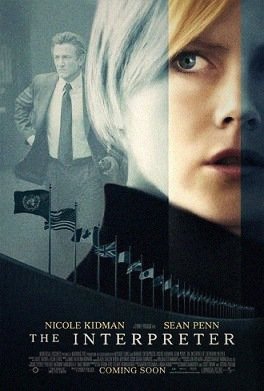
When The Interpreter opened in April 2005, the critical response was broadly positive without being ardent. Reviewers acknowledged the craft — Sydney Pollack1's assured, unhurried direction, the genuine coup of filming inside United Nations Headquarters, the performances from Nicole Kidman2 and Sean Penn3 — while arguing, sometimes sharply, about whether any of it added up to more than the sum of its parts.
The film landed in the low-to-mid sixties on Metacritic and held a similar position on Rotten Tomatoes, numbers that cluster around "generally favorable" without suggesting a consensus hit. Those aggregates, however, flatten a real disagreement. A meaningful portion of critics found the film intelligent, atmospheric and disciplined; another portion found it too slow, too restrained, too reluctant to deliver the genre satisfactions a thriller implicitly promises. Both responses were coherent. The film really is all of those things, depending on what you brought to the cinema.
The dominant complaint was pacing. Reviewers who wanted the plot to accelerate found Pollack's long-lens, real-location approach frustrating rather than immersive. The film takes its time establishing its world — the glass-and-grey corridors of the UN, the procedural rhythms of diplomatic protection, the accumulating weight of the central characters' respective griefs — and critics who read that as deliberate craft were satisfied; critics who read it as drift were not. Hardly any reviews were indifferent to this quality; the pace was simply the thing you either accepted or didn't.
Notably, the performances drew little argument. Kidman's Silvia Broome was widely praised for its controlled tension — the performance is built around the interpreter's trained invisibility, and reviewers noticed that the film's drama comes precisely when that composure fails. Penn's Tobin Keller attracted similarly consistent approval; critics noted the intelligence of a thriller built around a protagonist who drives events through scepticism rather than action. Catherine Keener4, in a supporting role, was frequently singled out for doing a great deal with limited screen time.
The UN access was also, almost universally, treated as significant. Critics understood that no fiction film had been permitted to shoot inside the building before, and they generally connected that fact to the film's texture — the sense that you are watching something located in a real political world rather than a studio approximation of one. Whether that texture compensated for the script's occasional convolutions was the fault line, but nobody doubted the texture itself.
The political dimension drew some commentary, mostly admiring. Reviewers noted that the fictional African republic of Matobo and its leader Edmond Zuwanie were drawn with enough complexity to resist easy allegory, and that the film declined to position itself as a simple liberal fable. That restraint was read, by most, as maturity.
§03A Legacy That Grew Quietly
At the box office, the film performed respectably — a solid return for a mid-budget adult thriller of its type — without becoming an event. It wasn't an awards contender, and it didn't generate the kind of cultural argument that trails a film for decades. What it did was survive. Streaming has brought it a second wave of viewers discovering a film that, in 2005, was perhaps slightly ahead of its moment: a studio thriller that trusted audiences to sit with ambiguity, that cared more about character grief than plot mechanics, and that was shot with the patience of an earlier era of Hollywood.
The critical arguments of 2005 — pacing, restraint, the balance between atmosphere and action — haven't dissolved so much as inverted. A generation of viewers arriving at the film now, when the slow-burn political thriller is an established prestige category, often find the original resistance to its tempo puzzling. The film hasn't changed. The frame around it has.
Sources · channel 01
Reference works consulted for the names, places and production facts on this page. Numbered notes are marked in the text.