Five performances, and what the film asks of them.
The Cast · 5 min read · 3 sections
Five performers, five registers — and a film that needed every one of them to hold.
§01The Weight at the Centre
Nicole Kidman1 and Sean Penn2 are the engine of The Interpreter, and Sydney Pollack3 cast them with full knowledge of what each would cost the other. Kidman's Silvia Broome is a woman shaped by containment: an interpreter by profession, someone trained to relay other people's words without inflection, without opinion, without self. When Broome inadvertently overhears what sounds like a plot against an African head of state inside the United Nations General Assembly4 hall, the film's dramatic pressure comes not from what she heard but from how hard she works to look as though she didn't. Kidman builds this character from the inside out — the stillness is not blankness but effort, and you feel the effort. Every moment where composure nearly breaks is earned because Kidman has spent the preceding scenes showing you how much it costs to maintain.
Penn's Tobin Keller is her opposite in method and mirror in damage. He is a Secret Service agent assigned to evaluate Broome as either witness or threat, and Penn plays him from a place of recent, unprocessed grief — his wife has just died, and Keller carries that loss the way someone does when they haven't yet decided whether to put it down. Penn works in stillness too, but where Kidman's stillness is disciplined, his is exhausted. The investigator's natural skepticism curdles just slightly into something more personal: Keller doesn't want to be wrong about Broome because he doesn't have the resources, right now, to be wrong. Penn rarely raises his voice. He doesn't need to. When Keller presses Broome for the truth in the film's dialogue-driven confrontations, Penn's quietness is more destabilising than any raised temperature would be.
What Pollack understood — and what keeps the film alive in its long middle passages — is that these two characters exist in permanent professional antagonism that slowly becomes something else, and the actors had to navigate that shift without rushing it and without playing what it eventually becomes before it arrives. Kidman and Penn are both, by instinct, actors who resist the easy signal. That shared quality is what makes their scenes feel genuinely pressurised.
Nicole Kidman
SILVIA BROOME
Composure treated as a professional skill — and the small failures of it treated as plot.
Photograph via Wikipedia.
Sean Penn
TOBIN KELLER
Grief-hollowed and procedural. His disbelief, not the plot against Zuwanie, drives the film.
Photograph via Wikipedia.
Catherine Keener
DOT WOODS
Keller's partner and the film's dry ballast — the one who says the obvious thing out loud.
Photograph via Wikipedia.
Jesper Christensen
NILS LUD
Zuwanie's head of security: courteous, unreadable, and always already in the corridor.
Photograph via Wikipedia.
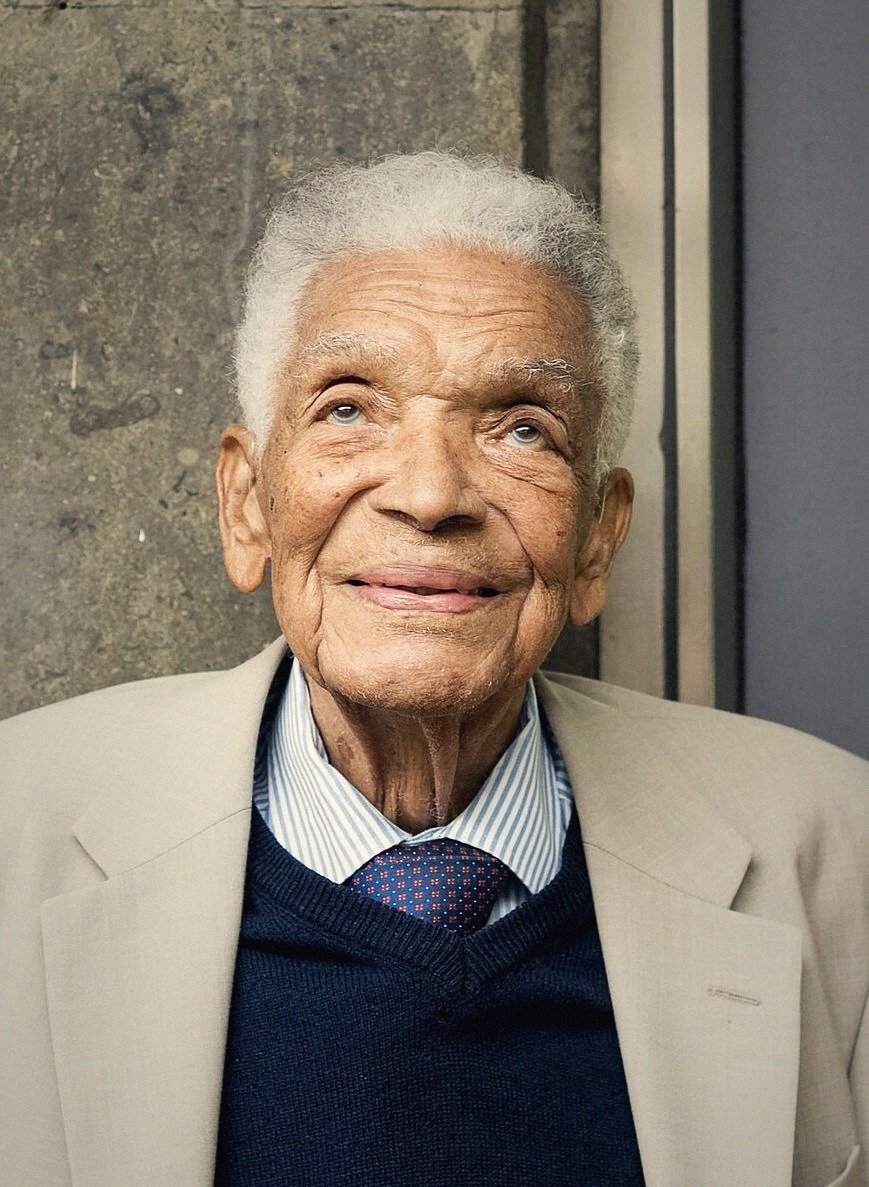
Earl Cameron
EDMOND ZUWANIE
A liberator turned strongman, played with a stillness the script does not always deserve.
Photograph via Wikipedia.
§02The Characters Who Make the World Real
If Kidman and Penn are the film's spine, Catherine Keener5, Jesper Christensen6, and Earl Cameron7 are what prevent it from collapsing into a two-hander.
Keener plays Dot Woods, Keller's partner, and the role asks something deceptively hard: be credible, be present, and ensure the audience never for a moment doubts that this is a real partnership rather than a plot convenience. Keener, Christensen and Cameron each occupy different levels of the film's architecture, and Keener operates at the load-bearing level. Dot is observant where Keller is blinkered by grief; she clocks Broome with a cool professional eye while Keller is still deciding whether to take the case seriously. Keener's naturalness — the way she listens in scenes where other actors would signal their character's intelligence more visibly — gives the Secret Service investigation its procedural credibility. She makes the world of the film feel staffed, which a political thriller absolutely must.
Jesper Christensen plays Nils Lud, and his role sits at a different angle entirely: less procedural, more personal, more directly linked to Broome's past in the fictional republic of Matobo. Christensen is a Danish actor with a face that has always been capable of registering warmth and menace as nearly the same expression, and Pollack uses that quality deliberately. Lud is entangled with Broome's history, and Christensen plays him with a weariness that could be guilt, could be grief, could be something more pragmatic. The film does not make him straightforwardly legible, and Christensen does not make the mistake of giving the game away. His performance stays opaque in a way that quietly sustains the thriller's central uncertainty about where the conspiracy actually lives.
Earl Cameron, a British actor of Bermudian origin with a career stretching back to the 1950s, plays Edmond Zuwanie — the Matoban head of state whose scheduled address to the United Nations General Assembly sets the film's clock running. Cameron was in his late eighties when the film was made, and he brings to Zuwanie something that casting a younger actor could not have manufactured: genuine historical weight. There is nothing decorative about the performance. Zuwanie is not a cartoon dictator; he is a man with a political past that, in the film's moral logic, makes him both comprehensible and dangerous. Cameron plays him with a formal gravity that the film needs in order for its central political argument — about accountability, about the limits of international justice — to feel like argument rather than backdrop.
§03What Pollack Asked of the Ensemble as a Whole
The film's unusual production context imposed a discipline on all five performers that no studio backlot could have enforced. Shooting inside United Nations Headquarters8 in New York, on real floors in real corridors with real diplomats occasionally moving through adjacent rooms, the cast was working in an environment that did not perform itself for the camera. The UN does not look like a film set. It looks like an institution — scaled for function, not drama — and that institutional scale could have dwarfed the actors or, worse, made them look as though they were performing in a documentary. Instead Pollack drew from his cast a quality of genuine habitation. They move through those corridors as though they belong there, and that quality of ease — won, presumably, through substantial rehearsal and through Pollack's own authority as a director who trusted actors in space rather than cutting around them — is a large part of why the film holds.
The specific demands differ per performer. Kidman had to render professional composure interesting for two hours. Penn had to make investigation feel like an emotional condition. Keener had to support a film without ever appearing to prop it up. Christensen had to withhold without going cold. Cameron had to make a small number of scenes carry enormous conceptual weight. That all five managed it, in a film that asks more of its actors than its action sequences, is the reason The Interpreter — two decades into a critical rehabilitation that is still ongoing — rewards revisiting on its own terms: not as a conspiracy thriller but as a film about what people do with what they know.
Sources · channel 01
Reference works consulted for the names, places and production facts on this page. Numbered notes are marked in the text.