A crowded genre, a distinctive entry: why The Interpreter keeps its distance from the pack.
§01The Genre and Its Habits
Political thrillers have never been in short supply, and Hollywood has refined the form to reliable efficiency. A corrupt institution, a secret worth killing over, an outsider who sees too much — the architecture is so familiar that audiences have learned to do most of the work themselves. The pleasure is partly in the machinery: the leak, the chase, the climactic exposure. Films from Three Days of the Condor to Michael Clayton have delivered on that promise with varying degrees of style, and the genre rewards craft precisely because its structural bones are so well-mapped.
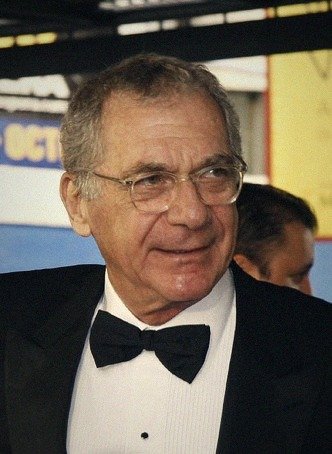
The Interpreter arrives in 2005 knowing all of this and then, at several key moments, declines to play along. That refusal is partly what divided reviewers at the time and partly what makes the film worth returning to now. It is less interested in whether a conspiracy can be proven than in what it costs a person to be the one who heard something — and whether the hearing of it obligates you in ways you cannot escape. Those are quieter questions than the genre usually asks, and Sydney Pollack1 had the patience to let them sit.
The political thriller's default currency is revelation: the moment the document surfaces, the tape proves guilt, the senator's name appears on the list. The Interpreter withholds that reward for long stretches, and in its place offers something more unsettling — the possibility that the witness at the centre of the story has her own agenda, her own grief, and her own reasons for bringing a conspiracy into the light that have nothing to do with civic duty. Silvia Broome is not a reluctant hero stumbling onto wrongdoing. She is a person from Matobo, the fictional African republic whose president's fate she may be trying to shape, and every choice she makes is coloured by that origin. The genre usually clears its protagonist of moral complication early on. This film does not.
The shelf, plotted: years elapsed after They Shoot Horses, Don’t They? (1969). Six selected features; The Interpreter closes the run in 2005.
§02What the Setting Demands
Location has always done ideological work in political thrillers. Washington's marble corridors, the glass offices of financial districts, the anonymous federal buildings in which conspiracies breed — these spaces signal that power is being abused somewhere close to its source. The Interpreter chose a setting that shifts that implication considerably. The United Nations Headquarters2 in New York is not a building associated with domestic wrongdoing; it is associated with the aspiration to multilateral order, with the idea that disputes between nations might be resolved through speech rather than force. Filming inside the actual building — the first feature production permitted to do so — gave the film its most distinctive visual and moral texture.
That choice is not cosmetic. In most political thrillers, institutions are the enemy, or at least the site of the enemy's operation. Here, the institution is presented as something more ambiguous: a space of genuine idealism that has proven, over decades, to be inadequate to the scale of what nations actually do to one another. Edmond Zuwanie, the fictional Matoboan head of state played by Earl Cameron3, is coming to the UN to address allegations that have made him, by the film's logic, a man who once stood for liberation and has since become the cause of atrocity. The UN is the arena in which his fate might be decided through a vote — and the arena in which Broome believes she has overheard a plan to kill him before that vote can happen.
The genre convention would be to frame this as a race against time to stop an assassination by a clean villain. The Interpreter keeps complicating who deserves what. Zuwanie's potential removal from power might, from one perspective, save lives. Silvia Broome's grief — rooted in what his regime did to her family and her country — gives her motives the film never pretends are simple. This is not a thriller about stopping a crime so much as a thriller about whether stopping this particular crime is straightforwardly the right thing to do. Very few films in the genre are willing to hold that question open as long as this one does.
The Pollack shelf
Film
Year
What it is
They Shoot Horses, Don't They?
1969
The endurance picture — Pollack at his most pitiless.
Three Days of the Condor
1975
The paranoid thriller this film is most often measured against.
Tootsie
1982
The comedy, and the proof he could direct performance above all.
Out of Africa
1985
The prestige epic; his Academy Award for direction.
The Firm
1993
The commercial thriller, procedural and unhurried.
The Interpreter
2005
His last feature as director.
§03Two Protagonists, No Clean Alliance
The genre's standard pairing puts an investigator alongside an imperilled witness, and the dramatic engine runs on trust building incrementally toward a joint effort. The Interpreter gives us Tobin Keller, Sean Penn4's Secret Service agent, and Silvia Broome, and then systematically prevents their alliance from becoming clean or easy. Keller's professional obligation is to protect the UN visit; his investigative instinct is to doubt Broome's account; his human response to her is complicated by his own recent loss, which the film handles with restraint. Penn plays him as a man doing his job rigorously, which means he cannot afford to simply believe her.
This dynamic is more interesting than it might appear. In a conventional thriller, the investigator's initial scepticism of the witness is a brief obstacle cleared by a plot development — a second body, a piece of corroborating evidence — that forces the pair into alliance. Here, the scepticism persists into the film's late stages in a form that feels earned rather than artificially prolonged. The argument between them is a genuine argument, about evidence and about whether Broome is a victim of the conspiracy she describes or a participant in something adjacent to it. That sustained disagreement is the film's real dramatic engine, and it distinguishes The Interpreter from most of its genre peers.
§04The Tradition It Belongs To
Place the film in a longer line, and the influences become visible. Pollack's own Three Days of the Condor (1975) is the obvious ancestor — a film equally absorbed by institutions, surveillance, and what ordinary professional competence looks like inside a system that has turned lethal. But The Interpreter is less paranoid than that earlier film, which belonged to a period when American cinema was systematically dismantling trust in federal structures. The post-Watergate thriller had a specific ideological charge; The Interpreter, arriving in the mid-2000s, is more weary than outraged. Its suspicion is less about exposure than about exhaustion — about what it feels like to have witnessed enough to know how these things go.
There is also an elegance to the film's formal restraint that links it to European political cinema more than to American genre mechanics. Long lenses, real interiors, a score that stays mostly out of the way, performances that do not signal their emotions broadly — these are choices that prioritise texture over tempo. The film asks you to watch carefully, to read Kidman's face when Broome is translating, to register the specific quality of Penn's stillness when Keller is computing what he has just been told. That mode of watching is more demanding than the genre usually requests.
Where The Interpreter sits, finally, is in a small category of political thrillers that use the genre's machinery in the service of genuinely uncomfortable moral territory: films that arrive at action sequences and plot mechanics but whose real subject is conscience under pressure, and whose endings do not feel like victories. It is not a perfect film — some reviewers felt its third act traded the moral complexity it had built for something more conventionally resolved — but its ambitions were unusually serious for a studio thriller of its moment. Thirty years from now, when someone wants to know what thoughtful mainstream political cinema looked like in the early 2000s, The Interpreter will be part of that answer.
Sources · channel 01
Reference works consulted for the names, places and production facts on this page. Numbered notes are marked in the text.